A four-horse race: The U.S. pommel horse title is up for grabs at the 2026 Championship
An Olympic medalist, a World medalist, and an NCAA champion are among the four men chasing the title in Phoenix, each capable of a 6.0-plus difficulty score.
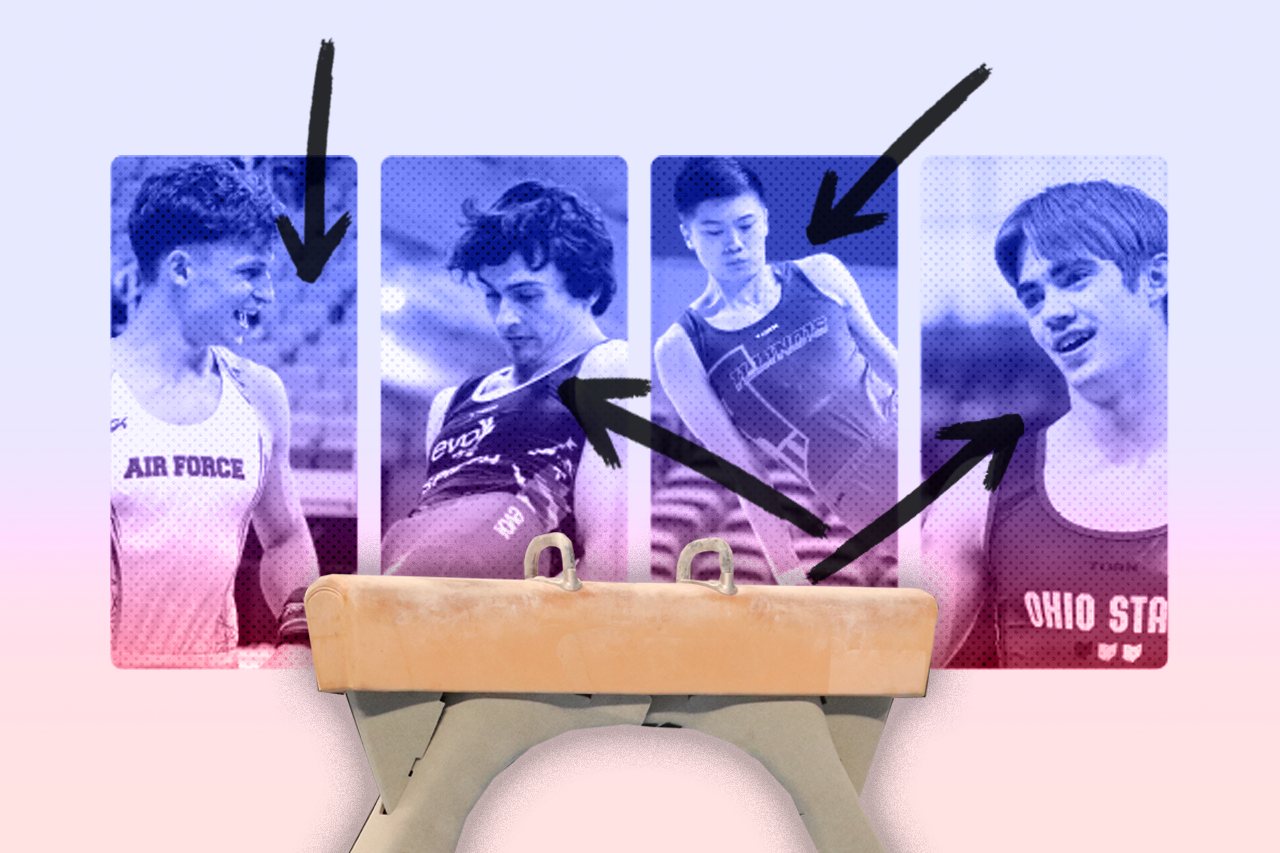
The current U.S. national team carries three pommel horse specialists, each capable of winning the U.S. title outright. A fourth, an Olympic bronze medalist not currently on the team, just qualified his way back into the conversation. Here's a breakdown of the four men with a shot at the title.
The Favorite: Patrick Hoopes
Hoopes (Air Force) enters as the reigning World bronze medalist and the defending U.S. champion. He is the slight favorite because he's the most consistent gymnast in the field. He is coming into championships on the heels of two strong routines at the Pan American Championships, where he won the pommel title and helped the U.S. qualify for Worlds.The numbers back it up.
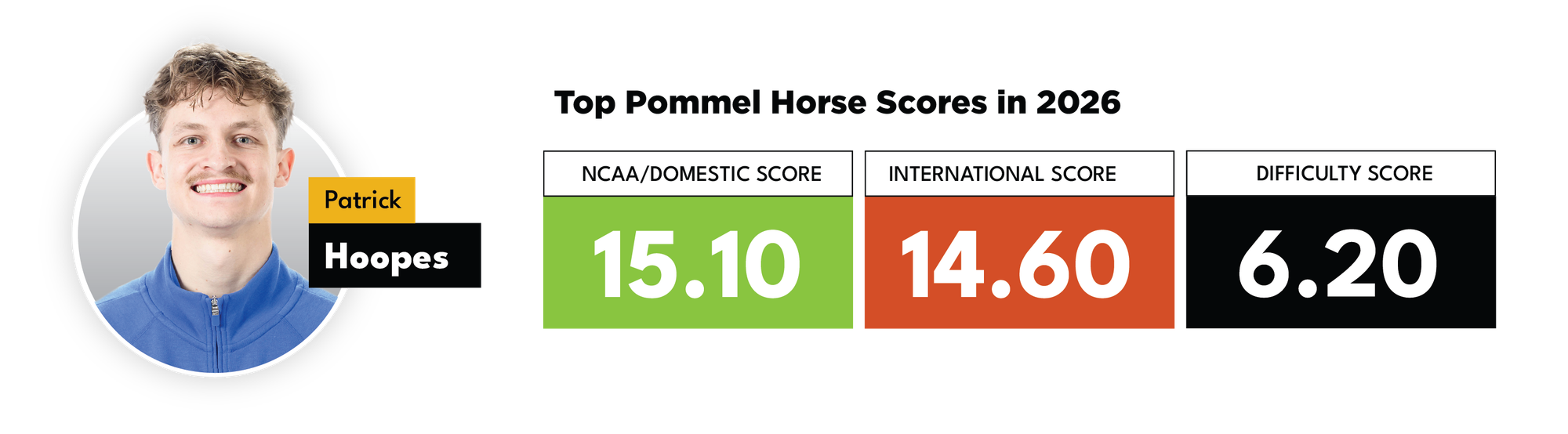
Hoopes posted a 15.10 in an exhibition routine at Air Force in February with 6.1 difficulty. His top score in international competition is a 14.6, set at the Pan American Championships team final. That's the highest score any American has posted internationally this year.
Hoopes has also shown the most difficulty of anyone in this field, competing a 6.2 routine twice this season. But in most competitions he dials it back to a 6.0, featuring a clean one-pommel spindle sequence and a circle that rarely breaks form. Not uncommon, but he back-loads the set with travel skills, crossing the horse four separate times before he dismounts, which leaves him vulnerable to fatigue late in the routine and can affect the cleanliness of his dismount.
If Hoopes wins , it will likely be because he is able to once again produce clean routines, with minimal deductions, and no major errors. He has been consistent and confident all season.
The Rival: Brandon Dang
Dang (Illinois) is having a good year. He took the NCAA title, which should give him momentum heading into nationals. His season opened at the Cottbus World Cup, where he finished sixth. He attempted a 6.1 difficulty routine in the final, which proved to be a bit ambitious at the time and resulted in several form breaks. Still, the underlying skill and potential were there.
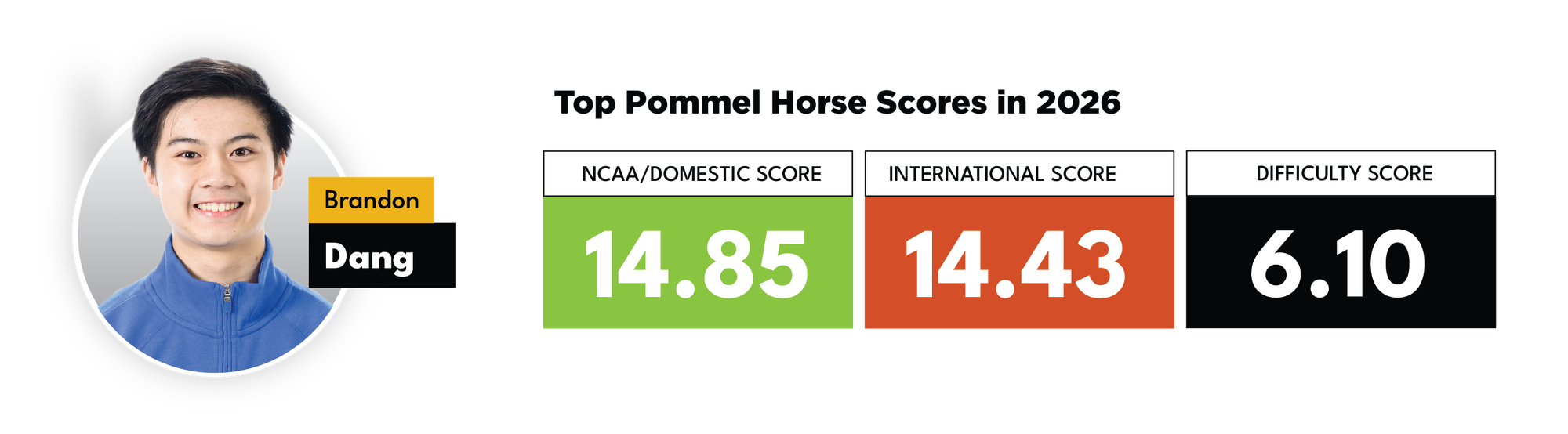
Dang's best domestic score of the season came at the Big Ten Championships, where he posted a 14.85 with 6.0 difficulty. His top international mark of a 14.433 (6.1 difficulty) was from Cottbus.
Dang has competed several different routine compositions this season. That makes it difficult to predict what we'll see at nationals. One thing unique about Dang's routine composition is his ability to link one-pommel elements without adding extra circles. In his Big Ten-winning routine, he connected his Bezugo without any windup. Every additional circle is a chance for judges to deduct points. Dang’s approach could be a smart way to maximize his high difficulty.
If Dang wins, it's likely because he masters that 6.1 difficulty cleanly enough to get a few tenths on his competitors regardless of the occasional form break.
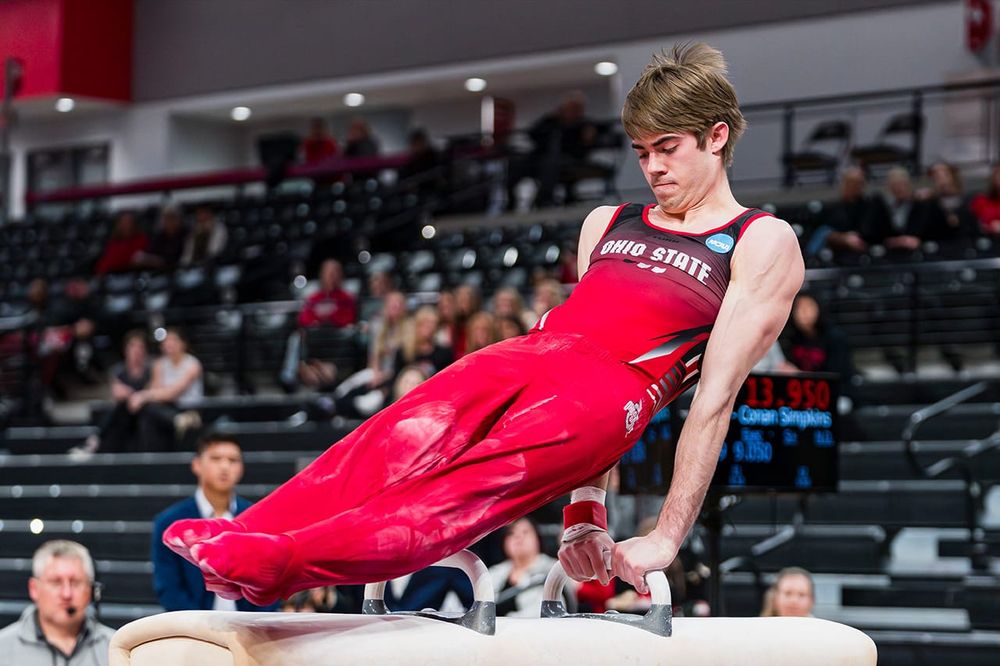
The Underdog: Parker Thackston
Thackston (Ohio State) earned his first spot on the national team by winning the event at the 2026 Winter Cup. He finished second to Dang at Big Tens, then fell in the NCAA finals. In an exclusive with Auric Gymnastics, Thackston confirmed he plans to compete a 6.1 routine at nationals, upgrading his flop series and converting one travel skill to a Driggs. He will be on par with Dang and Hoopes when it comes to difficulty.
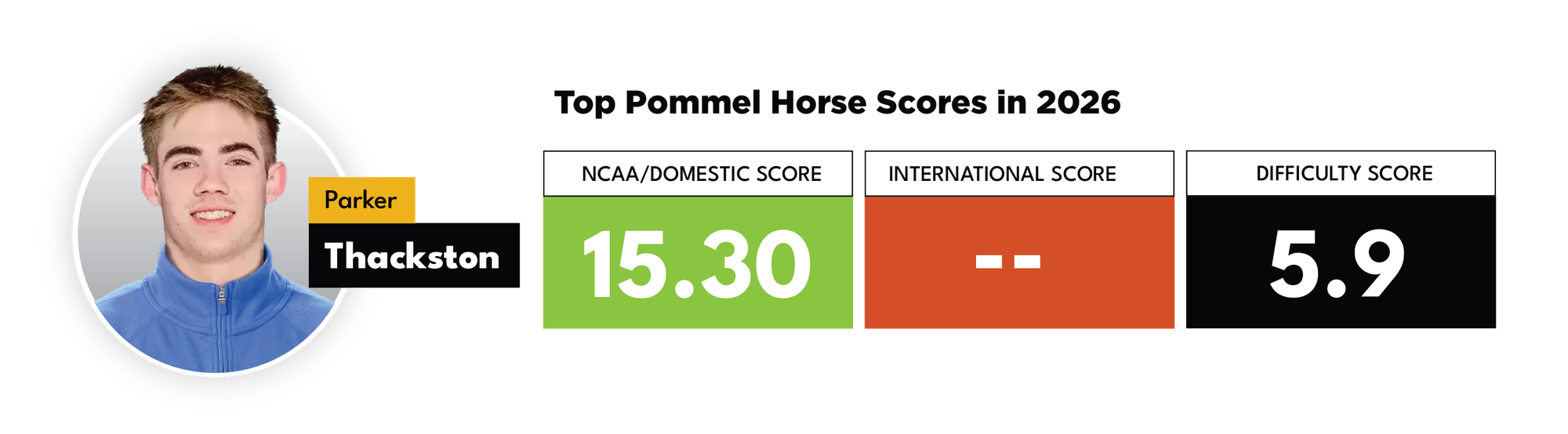
What put Thackston into the conversation in the first place was a very impressive 15.30 he scored at a late-February NCAA meet, with only 5.9 difficulty. However, he hasn't been on an international assignment this year.
His scissor elements have been the shakier part of his routine, which is a little odd, since they're generally considered easier than travels or single-pommel work. But the rest of the routine is smooth. His circles are steady, and he doesn't rush any single skill. He also has a consistently strong dismount, transitioning into a handstand in one fluid motion.
If Thackston wins, it will likely be because he upgrades successfully and avoids the common deductions on skew or the dismount that have tripped up Dang and Hoopes.
The Wild Card: Stephen Nedoroscik
Nedoroscik (EVO), the Olympic bronze medalist and 2021 world champion on the event, walks in as the wild card for this competition. After stepping away from the national team to take advantage of his post-Olympic fame, he returned to competition at the National Qualifier to punch his ticket to nationals.
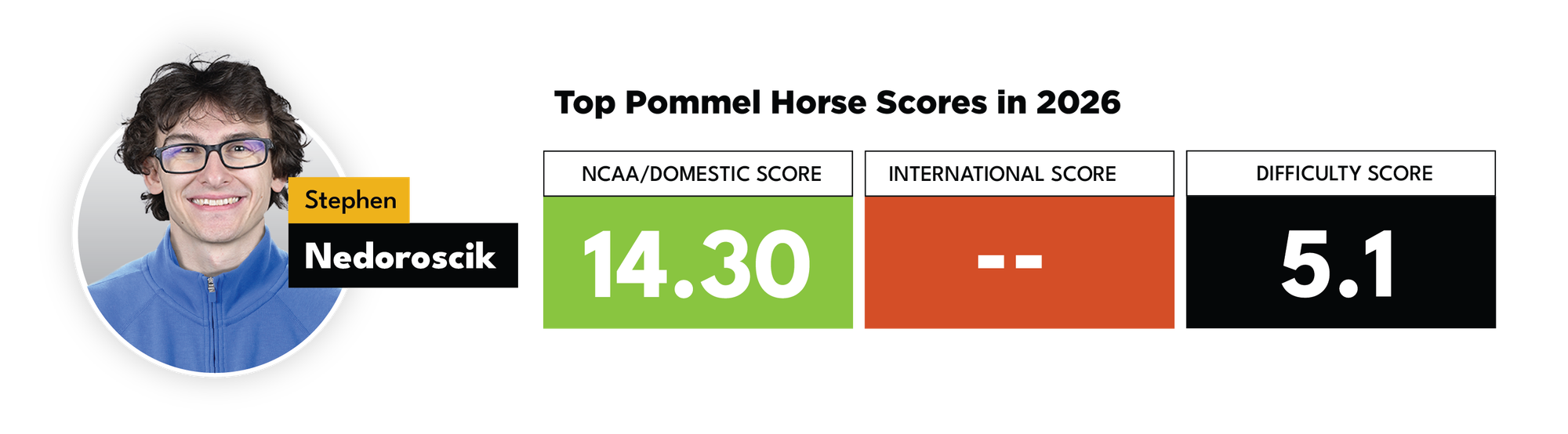
He won the event, but with only 5.1 difficulty. He'll need to find nearly a full point of difficulty to compete with the rest of this field.
Nedoroscik has never been predictable meet-to-meet. He doesn't always show the same routine twice, so don't expect matching sets on day one and day two in Phoenix. He has the skills to put together a genuinely competitive difficulty score. The real question is whether he can bring all those elements together in the same routine, and if he has the stamina to keep up with competitors who have been competing consistently all year long.
If Nedoroscik wins, it’s likely because he managed to hold onto some of that Clark Kent energy from the Olympics and emerge from nowhere to the roar of the crowd.
The bonus math
USA Gymnastics uses a bonus system to reward difficulty. Roughly speaking, every extra tenth of difficulty buys another tenth of bonus, so a routine that's four-tenths higher in difficulty is worth more than double that in total bonus.
With four gymnasts capable of similar execution scores, those bonus tenths could end up deciding the title.
What's on the line
Whoever wins the event will automatically make the national team as long as they perform a 6.1 routine on at least one day of competition. Earning the national title also puts the winner in a strong position to be selected for the world team. Given the U.S.'s recent streak of individual medals, including podium finishes on pommel horse at the last three global championships, the winner will likely be in contention for an individual medal at the upcoming world championships.
Author
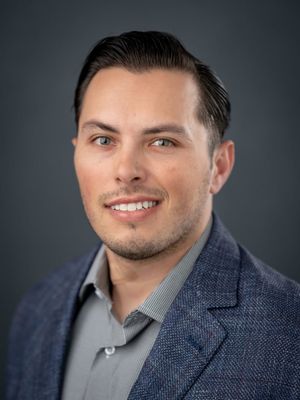
Gabe is the founder of Auric Gymnastics. He is a former NCAA gymnast who represented the University of Nebraska from 2009 to 2013.
Sign up for Auric Gymnastics newsletters.
Stay up to date with curated collection of our top stories.