Since 2022, USA Gymnastics has built a bonus system into its domestic scoring that rewards athletes for attempting harder skills.
The idea is straightforward: encourage individual athletes to train and compete routines with higher difficulty values, which in turn pushes up the team's overall difficulty when it matters most on the world stage.
Why Was the Bonus System Created?
There are two main reasons behind the system.
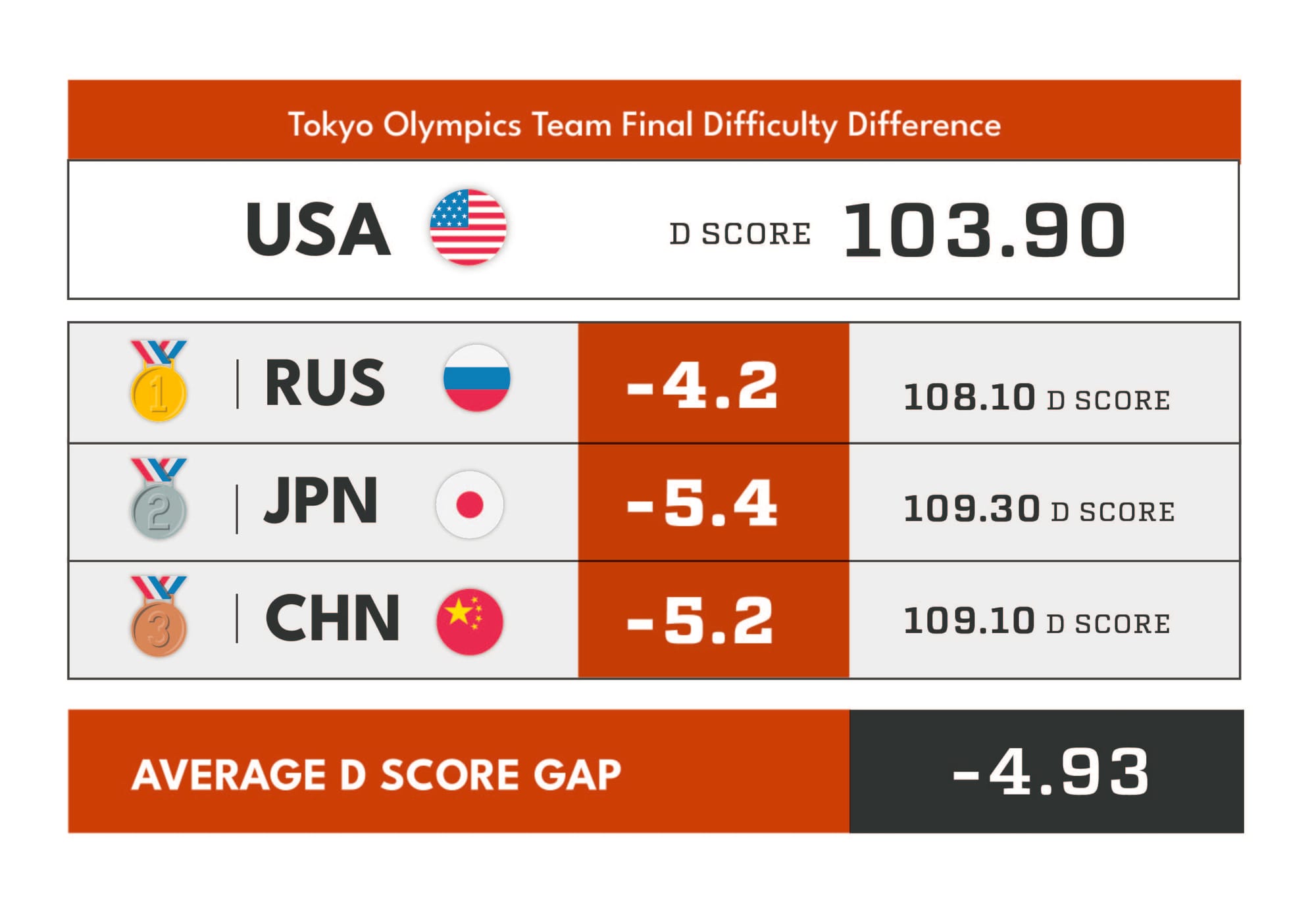
The first is difficulty. At the Tokyo Olympics, the U.S. men's team started team qualification nearly five points behind the world's top squads purely on difficulty, a gap that's nearly impossible to close through clean execution alone. The goal of the system was to increase the difficult score of the team.
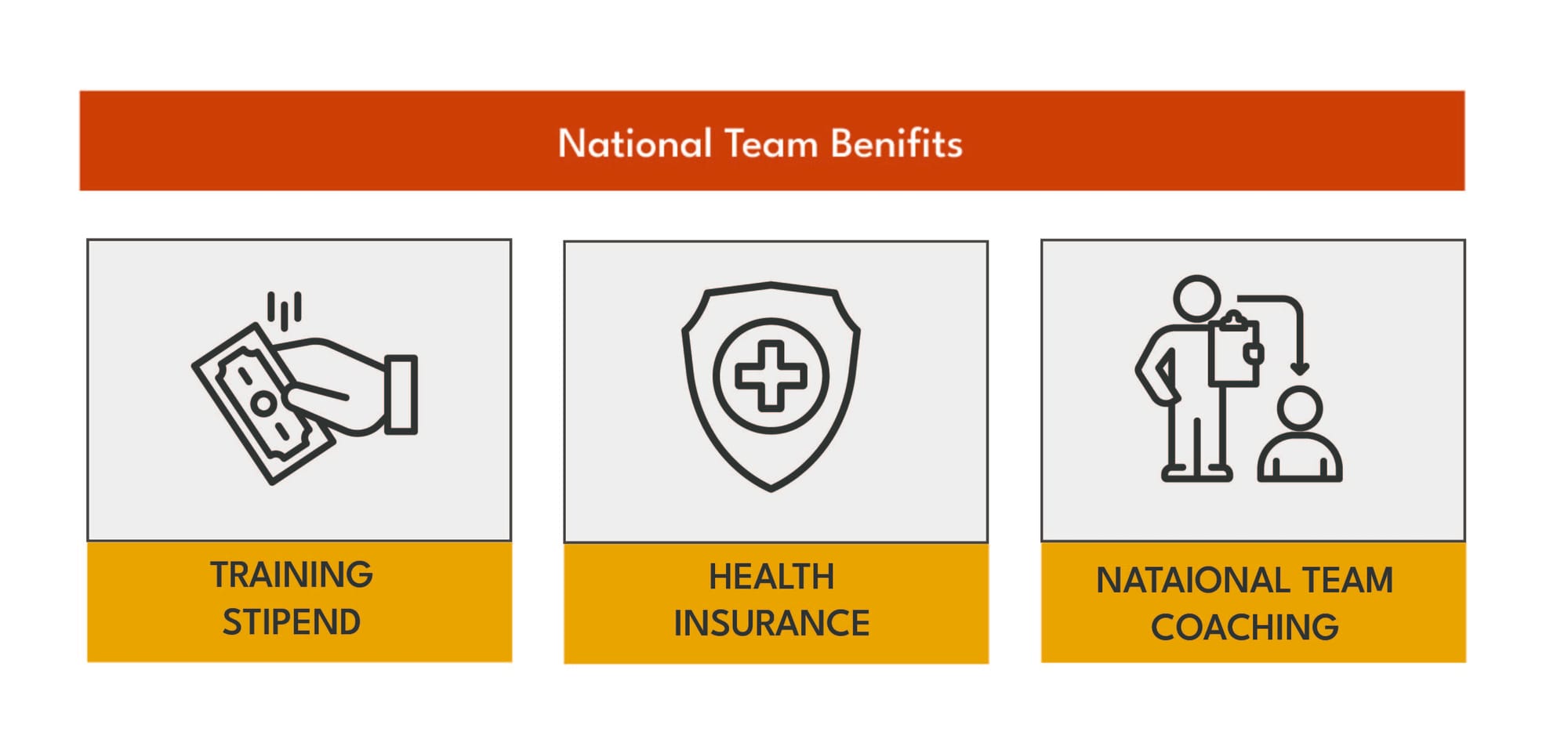
The second reason is athlete incentive. In the past, national team members had little reason to increase difficulty, since their funding and team status depended on consistent results at major meets like nationals and Winter Cup. Trying and failing a new skill could cost them their national team spot, so most played it safe. Losing that spot also meant losing their training stipend, health insurance, and access to national team coaching, making it much harder to continue at the elite level.
The bonus system aims to address this unintended consequence. Now, a gymnast who attempts a routine with enough difficulty to contend for an event final at Worlds or the Olympics can absorb a major error, even a fall, without jeopardizing their entire competition.
How Does the Bonus System Actually Work?
The mechanics are fairly simple. If a gymnast performs a routine with a high enough difficulty score, or D-score, they receive extra tenths of a point added to their total, on top of whatever they earn.
The table below shows the current bonus tiers for each of the six men's events
USA Gymnastics · Scoring Reference
Domestic Bonus System
Bonus values added to Difficulty Score by apparatus, used only in U.S. domestic competition.
| Floor Exercise | Pommel Horse | Still Rings | Vault | Parallel Bars | Horizontal Bar | ||||||
|---|---|---|---|---|---|---|---|---|---|---|---|
| D-Score | Bonus | D-Score | Bonus | D-Score | Bonus | D-Score | Bonus | D-Score | Bonus | D-Score | Bonus |
| 5.5 | 0.202 | 5.4 | 0.202 | 5.0 | 0.202 | 5.0 | 0.217 | 5.3 | 0.202 | 5.7 | 0.202 |
| 5.6 | 0.305 | 5.5 | 0.305 | 5.1 | 0.305 | 5.2 | 0.471 | 5.4 | 0.305 | 5.8 | 0.305 |
| 5.7 | 0.408 | 5.6 | 0.408 | 5.2 | 0.408 | N/A | N/A | 5.5 | 0.408 | 5.9 | 0.408 |
| 5.8 | 0.513 | 5.7 | 0.513 | 5.3 | 0.513 | 5.4 | 0.766 | 5.6 | 0.513 | 6.0 | 0.513 |
| 5.9 | 0.618 | 5.8 | 0.618 | 5.4 | 0.618 | N/A | N/A | 5.7 | 0.618 | 6.1 | 0.618 |
| 6.0 | 0.725 | 5.9 | 0.725 | 5.5 | 0.725 | 5.6 | 1.109 | 5.8 | 0.725 | 6.2 | 0.725 |
| 6.1 | 0.833 | 6.0 | 0.833 | 5.6 | 0.833 | N/A | N/A | 5.9 | 0.833 | 6.3 | 0.833 |
| 6.2 | 0.941 | 6.1 | 0.941 | 5.7 | 0.941 | 5.8 | 1.504 | 6.0 | 0.941 | 6.4 | 0.941 |
| 6.3 | 1.051 | 6.2 | 1.051 | 5.8 | 1.051 | N/A | N/A | 6.1 | 1.051 | 6.5 | 1.051 |
| 6.4 | 1.162 | 6.3 | 1.162 | 5.9 | 1.162 | N/A | N/A | 6.2 | 1.162 | 6.6 | 1.162 |
| 6.5 | 1.274 | 6.4 | 1.274 | 6.0 | 1.274 | N/A | N/A | 6.3 | 1.274 | 6.7 | 1.274 |
| 6.6 | 1.387 | 6.5 | 1.387 | 6.1 | 1.387 | N/A | N/A | 6.4 | 1.387 | 6.8 | 1.387 |
| 6.7 | 1.502 | 6.6 | 1.502 | 6.2 | 1.502 | N/A | N/A | 6.5 | 1.502 | 6.9 | 1.502 |
FX = Floor Exercise · PH = Pommel Horse · SR = Still Rings · VT = Vault · PB = Parallel Bars · HB = Horizontal Bar
This table also effectively sets the baseline for what the U.S. men's program currently considers "difficult" on each apparatus.
How Does a Score Actually Break Down at a U.S. Meet?
When USA Gymnastics posts a score from a domestic competition, it's really made up of three components:
- The base difficulty and execution score (the same type of score you'd see at any international meet)
- The bonus added on top for exceeding a difficulty threshold
- Any stick bonus or neutral deductions
Add those together, and you get the athlete's final posted score.
Author

Gabe is the founder of Auric Gymnastics. He is a former NCAA gymnast who represented the University of Nebraska from 2009 to 2013.
Sign up for Auric Gymnastics newsletters.
Stay up to date with curated collection of our top stories.