How the U.S. Got Too Good at Pommel Horse
The U.S. has built a deep pipeline of pommel horse workers, brought about by NCAA coaches' recruiting decisions, a rebuilt junior program, and a strange one-time Olympic qualifying rule.
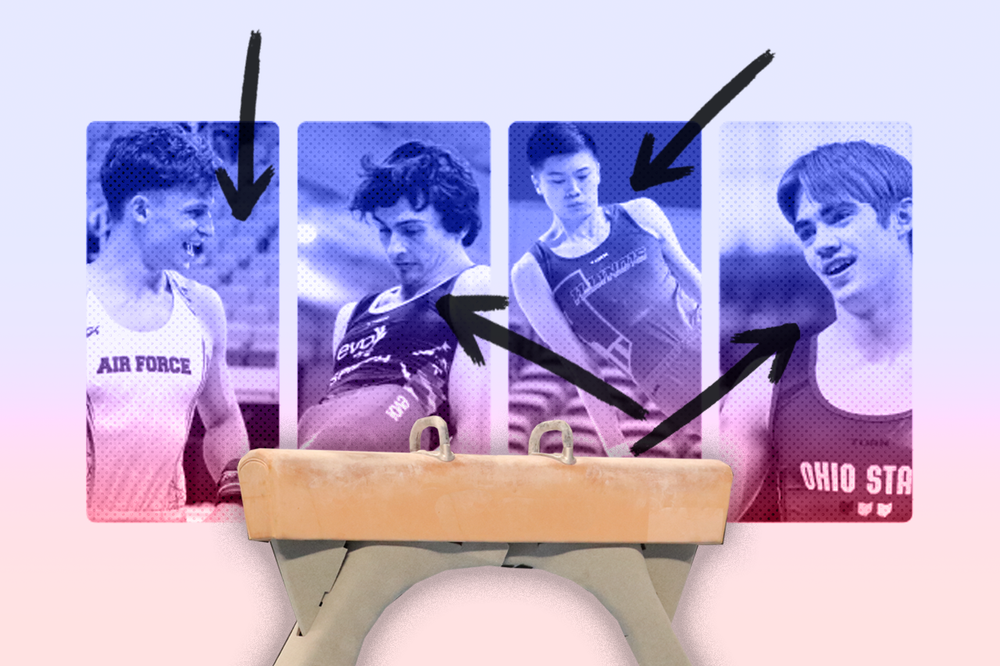
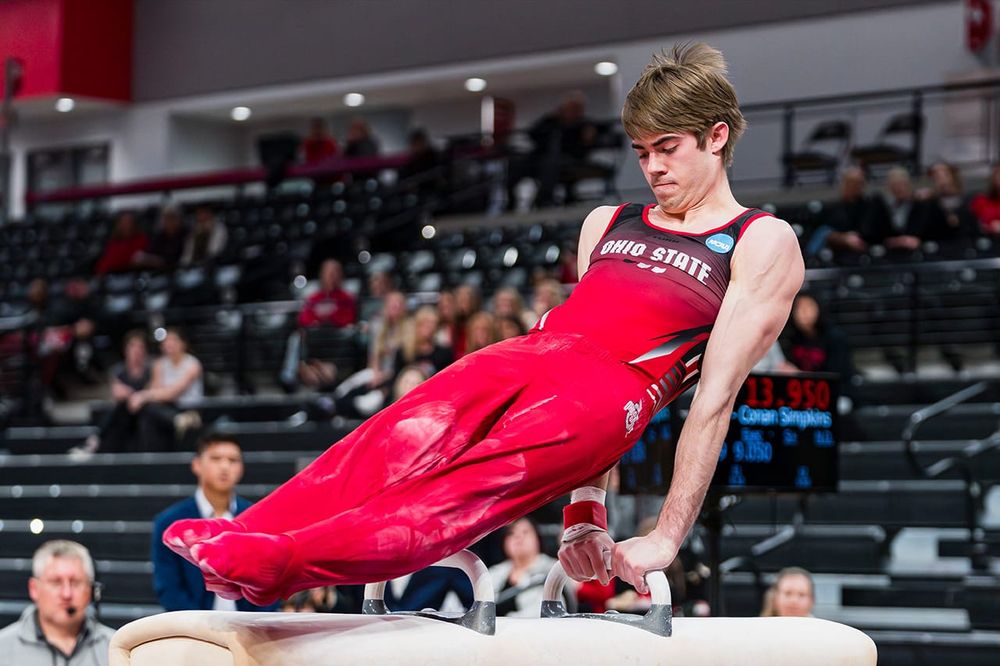
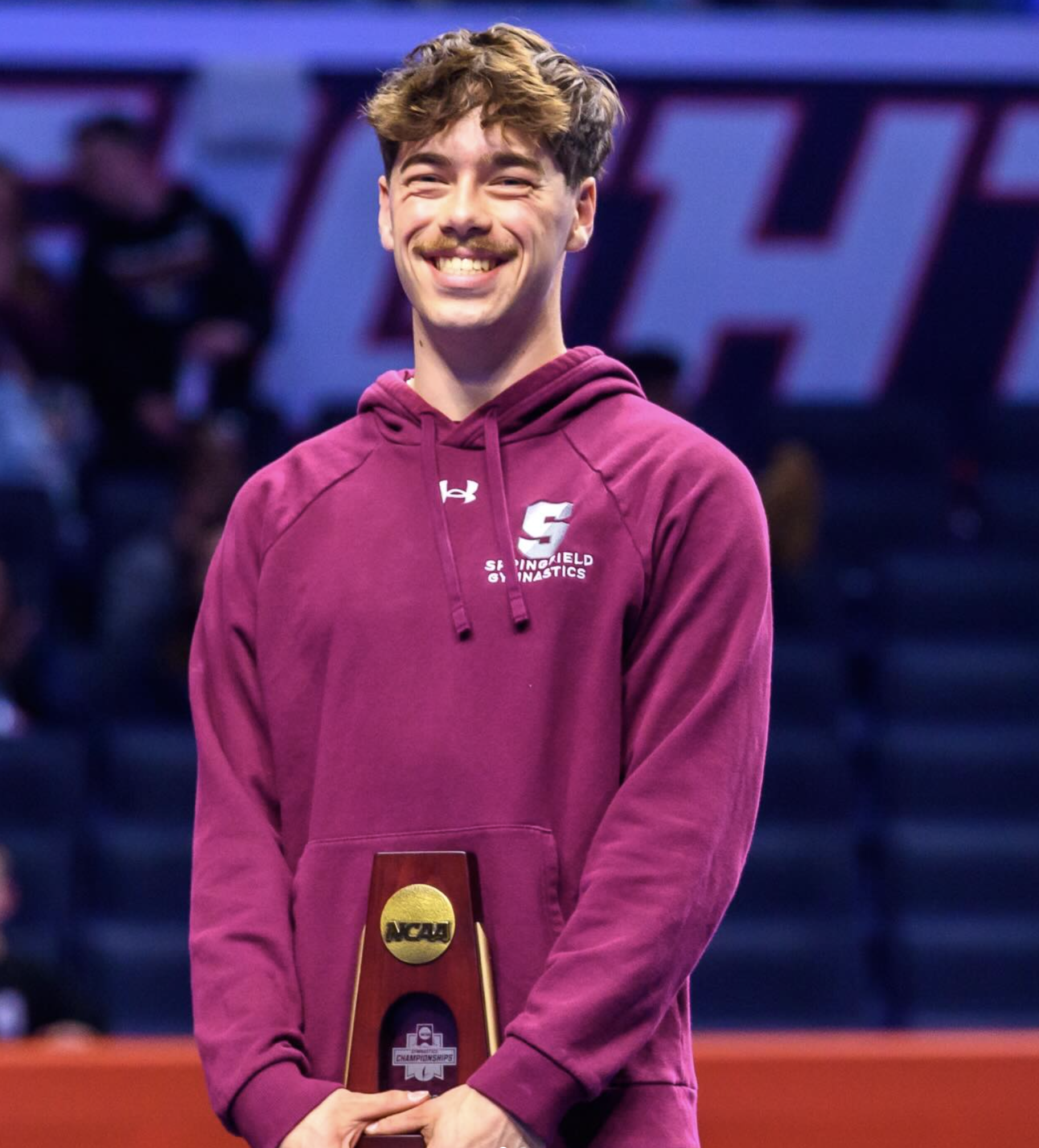
PEYTON CRAMER IS GOOD ON POMMEL HORSE. Good enough at pommel horse to have earned NCAA All-American honors on the event. He also doubts he'll ever make a U.S. national team. His gymnastics is world-class, but because there are, by his own count, as many as fifteen Americans right now who can do roughly what he does.
"A lot of the guys in the NCAA are at that level of really good pommel… there's just so much talent," he said. "You might be in the wrong country for it, but your pommel talent is national level."
That sentence would have made no sense two decades ago. For most of the 2000s and early 2010s, the U.S. men could barely find one gymnast who was internationally competitive on pommel horse, let alone fifteen. At the 2010 World Championships, of the U.S. team fell short of a medal, and Jonathan Horton didn't hide why.
"We knew that [pommel horse] was our weakest event by far, and we had to do a good job," Horton said afterward. "Unfortunately, we kind of put ourselves in a hole . . . we scored way lower than we wanted to, and it was just really hard to come back."
It wasn't just that team, and it wasn't just that year. For most of two decades, pommel horse was the event that decided whether the U.S. men medaled, and it usually decided against them.
However, over the last decade, the U.S. has built a deep pipeline of pommel horse workers. This change was brought about by NCAA coaches' recruiting decisions, a rebuilt junior program, and a strange one-time Olympic qualifying rule. Let's break down how this transformation happened.
The problem
"There's nothing fun about the pommel horse. Nothing," an Associated Press writer declared in a 2012 Sports Illustrated piece previewing that year's Olympics, describing the event that had "bedeviled American gymnasts . . . for nearly three decades." It lacked the high bar's releases, vault's explosiveness, the rings' muscle. It was, instead, 45 seconds of chalky misery on a 14-inch-wide bench.
Because the U.S. national program consistently struggled on pommel horse, the event developed a reputation for being uncool or boring: a narrative that doubled as the USA’s excuse for poor results and inadequate training methods. But that reputation never matched the reality: while it may not be the flashiest event, pommel horse showcases impressive elements like complex circles, flairs, and other uniquely difficult skills.
The root of the problem was structural, and no amount of media criticism could hide it. The U.S. all-around development system simply wasn’t producing gymnasts who could compete at the highest level on every event. Pommel horse was suffering from both a branding problem and a performance one.
Rebuilding from the ground up
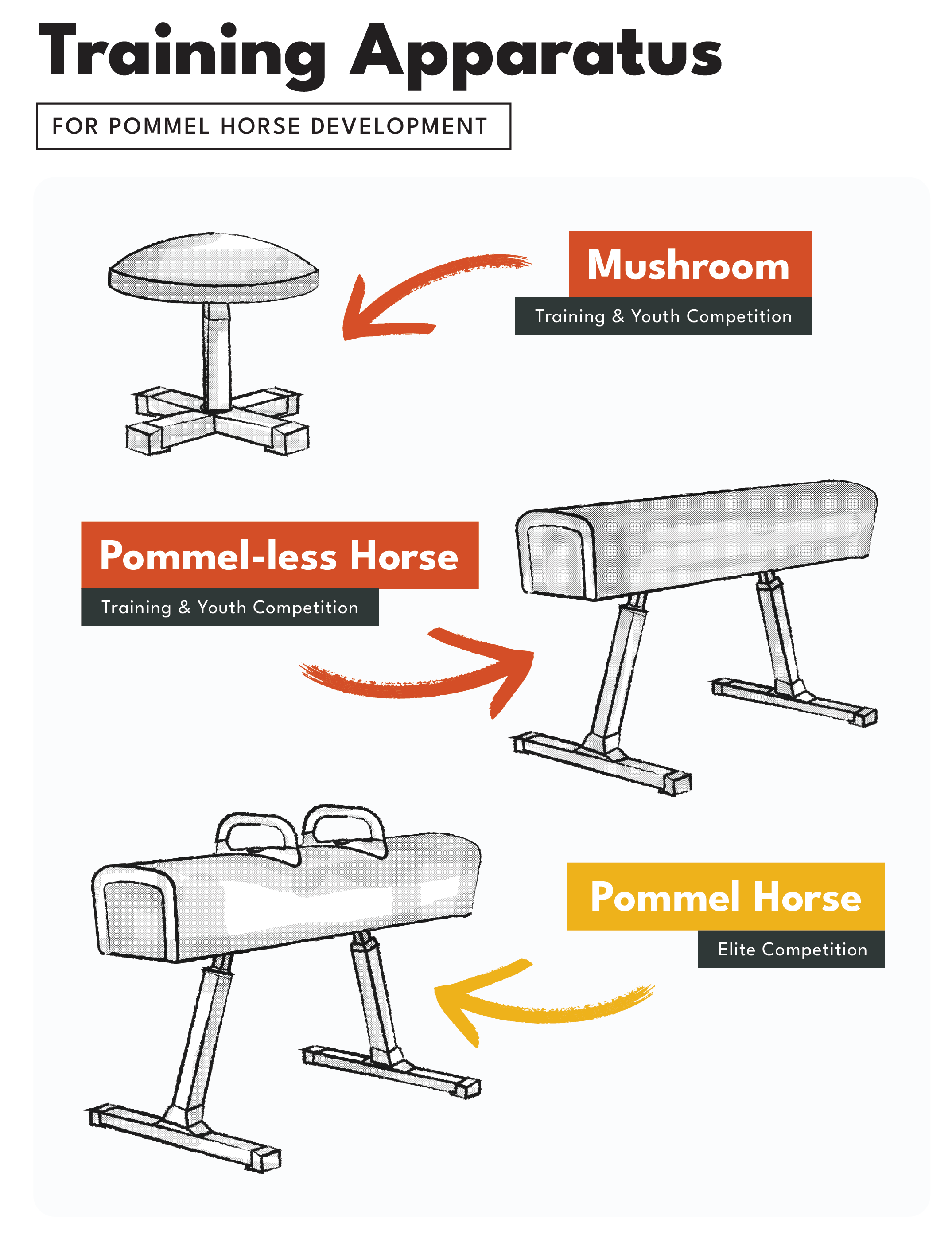
For young gymnasts, learning pommel horse has always involved a variety of specialized training apparatus, most notably the mushroom and the pommel-less horse. Previously, youth development routines were split into two parts: scissors on the regular competition horse and circles on the mushroom. The plan was for children to transition to the full pommel horse as they got older. In practice, though, this transition rarely happened smoothly. The leap from mushroom to full pommel horse proved too difficult; few gymnasts (and, frankly, few coaches) were prepared for it. The problem was rooted in priorities: circles are the fundamental element of pommel horse, but the old system placed too much emphasis on scissor skills. To address this, the US development program abandoned the early use of the competition pommel horse. Instead, youth gymnasts focused almost exclusively on training circles. The old routines were replaced with new ones designed to hone circle fundamentals, using the mushroom and pommel-less horse to drill the core movement again and again.
According to US Military Academy Coach JD Reive's timeline, pommel horse began to be prioritized by USA Gymnastics "three quads ago." By Coach Reive's description, this was tedious work for the young athletes. "It's boring as hell," he said.
"You're literally just working on a circle shape for years and years and years till the thing takes off, which is why it also produces specialists.”
Other national programs tend to keep young gymnasts on the mushroom and a leather training aid for longer before transitioning them to a full pommel horse. The American challenge, Reive said, has always been retention, keeping kids in a demanding sport long enough for that foundation to actually take hold. The current generation of coaches, many of whom came up through the sport's earlier, less circle-focused curriculum, built the newer routines specifically to correct that. "Those of us that lived through it and did it and saw the error of our ways," he said, "we're like, 'Okay, how do we resolve that?' Those are the guys that put those routines together, and it was just focusing on circle shape and position."
When the US men’s development program released technical sequences for elite-track competition in 2021-2022, the committee evaluated the effectiveness of the new strategy. In their documentation, they wrote: “In the end it was decided the best course of action was to continue the refinement and development of a sound circle,” and further emphasized that
“The committee felt like the reinforcement of the circle in cross support position on a horse with no pommels would be the most beneficial to the athletes’ development.”
Occasionally, this system produces a kid who, by Coach Reive’s account, thinks 'I like doing that,' and then they just keep going with it."Cramer thinks this self-selection is the real story behind the nerdy-guy stereotype that is associated with the event. "People who do very well on pommel are very analytical people," he said. "Pommel is very cause and effect. You can watch a video of yourself, and you should be able to coach yourself relatively easily. If my hips break here, I need to fix this." It’s no surprise that many pommel horse student-athletes major in science and engineering. Other events don't reward that kind of self-diagnosis nearly as well, he said; other events happen too fast to correct in real time, no matter how technical an athlete is. Horse is legible. Anyone patient enough to sit with their own footage can usually find the flaw and fix it.
The cheapest event in the gym
The pommel horse is unique as a gymnast can meaningfully train without a gym. A mushroom runs a few hundred dollars (roughly what a parent might spend on a new game console), and, unlike a vault runway or a high bar, it can fit inside most homes.

In eighth grade, with gyms shut down, Michigan's Aaronson Mansberger’s parents found a pommel horse listed on Facebook Marketplace and hauled it into the basement. He trained on it alone, with no coach in the room, using his phone as his only feedback.
"I just set up my phone, recorded all my turns, watched every turn, and figured out what to do differently to get better every time," he said.
By the time his gym reopened, the difference was obvious. "It was a night-and-day difference, I think, between before the pandemic and after the pandemic," he said. "My circles are better, and I was ready to start getting ready for college on pommel horse."
How the NCAA built a market for specialists
Two decades ago, there were very few gymnasts who could be considered true pommel horse event specialists. In the 2007 NCAA team finals, there were only three gymnasts who competed exclusively on pommel horse. However, in the decades since, this number has exploded.As mentioned earlier, the system was churning out all-arounders and multi-event gymnasts who were generally weak on pommel horse. Most of the top pommel workers at the time still trained and competed across multiple apparatus. Gradually, NCAA coaches began to address these persistent gaps by recruiting athletes specifically for their ability on pommel horse. At first, these new specialists produced reliable but not exceptional routines. Still, their presence filled a crucial need.
Coach Reive was one of the coaches driving this change. In the early 2010s, when he was the head coach at Iowa, he recalls identifying recruits and making their role clear from day one. Tell them point blank,
"Your job is this horse routine with this score, and you're the leadoff guy."
Pommel horse has become the rotation that can make or break any team’s chances in competition. Its relatively lower physical wear and tear (by elite gymnastics standards) adds another incentive for coaches to recruit specifically for it. Coach Reive now prioritizes finding a pommel horse specialist over any other single apparatus "by a landslide," he says. As the U.S. national team has learned the hard way, developing top-level talent on pommel horse takes years, far longer than other events. "Every other event in gymnastics, the guys get better when they go to college. Pommel horse is different," Reive explains. "I'm not taking a kid who struggles on pommel horse and making them good in college. They're not going to go from mediocre to All-American in a four-year window." But a gymnast who already has a strong foundation on pommel horse is worth recruiting aggressively, even as a walk-on. Multiply that logic by every program in the country, all chasing the same competitive edge, and the depth increases rapidly. In 2015 at the NCAA team finals, Coach Reive's pommel horse lineup was 100% specialists. Meaning that of the 14 team members, five of them were there to only complete one pommel routine. This trend continued, and by the 2026 NCAA team finals, between the six qualified schools, there were 13 gymnasts who competed exclusively on pommel horse.

As collegiate coaches began recruiting more gymnasts specifically for pommel horse, youth coaches took note. They started encouraging promising athletes in middle school and early high school to specialize in the event, recognizing that pommel horse could be their ticket to an NCAA roster. Aaronson Mansberger’s path at Michigan is a perfect example of this new reality. Like most high schoolers, he sent coaches videos of all six events during the recruiting process. But it quickly became clear to both him and the coaches that his future was on pommel horse. Mansberger embraced the role: “This is what I'm the best at,” he said. “It's nice to have extra time to focus in on it and really analyze everything.”
The spotlight is turned onto the pommel horse
The final ingredient was visibility. For the Tokyo Games only, the World Gymnastics (then known as the International Gymnastics Federation) reduced team sizes from five to four and introduced a pathway for gymnasts to qualify as individuals outside their national teams. These individual spots didn’t contribute to the team score, but they allowed a single athlete to compete on the Olympic stage based on their own merits. It was a one-time experiment; after Tokyo, the sport reverted to five-member teams without this individual specialist option.
But for one Olympic cycle, this rule change had an impact on the US men's team selection. During the Olympic trials, Alec Yoder and Stephen Nedoroscik emerged as the top contenders for the individual spot, and by coincidence, both were specialists on the same event. Yoder edged out Nedoroscik to claim the Olympic berth, and then advanced to the Olympic event finals and ultimately finished sixth.
Looking back, Mansberger, then just a high school freshman, remembers the Yoder-Nedoroscik rivalry as "an awesome show." "Before, the US was kind of weak on horse, and then we had some guys come in like Alec Yoder and Stephen Nedoroscik," he said. "I think people watching them saw, 'Hey, maybe I can do that,' and now we have a lot of guys going for it."
When Nedoroscik finally had his own Olympic moment, it was bigger than anyone could have imagined. He helped the U.S. team win a bronze medal, then captured an individual bronze just days later. "Pommel Horse Guy" became a nickname, a meme, and, for a brief moment, a minor national obsession.

What changed wasn’t just Nedoroscik’s success on pommel horse; it was the way the sport’s culture, which once derided the event, began to see it in a completely new light. Pommel horse was no longer the odd event gymnasts had to put up with; it became the event that brought Team USA a medal.
Coach Reive sees the change in who’s willing to specialize, and how early. "I think high school kids are kind of doing that now," he said, "and I think it's because we normalized pommel horse specialist." Nedoroscik’s Olympic spotlight made that pathway suddenly visible; young gymnasts realized, "Oh, I can just do that?" Now, specialization has become a deliberate strategy.
The math problem
The partnership between revamped junior training methodology and NCAA recruiting has transformed the U.S. into a producer of elite pommel horse talent.But now there’s a new question hanging in the air: What if teams just don’t need pommel horse specialists anymore?In international team finals, each country fields five gymnasts, with three competing per event, making a total of eighteen routines that count toward the team score. This means that one pommel horse counts for just about 5.5% of the total score. For all the positives, there’s still a big negative: pommel horse is risky; one fall can erase an advantage. In 2023, for example, the year before Nedoroscik became nationally famous, he didn’t make the world team. Despite winning the U.S. title with a high score, the numbers didn’t work in his favor. The five all-arounders selected could collectively score high enough on pommel that adding a specialist’s few extra tenths simply wasn’t worth the roster spot. The 2023 World team, like the one in Paris, also finished third.In the 2024 Paris team final, only one other team, Canada, used the same pommel horse specialist strategy as the U.S. The gold and silver medalists, Japan and China, had no event specialists. While the specialist approach has helped the U.S. reach the podium, it may not be the formula for gold.
"We're sitting at the end of all of that, where it's like, oh my God, we have too many of them," Coach Reive said.
"How do we balance this out with a five-four-three format?" While all-arounders are preferred, Reive said, "there's still a component of it that we have intentionally put in specialists."
This is the embarrassment of riches that the U.S. now finds itself in. It spent years building a system to produce world-class pommel horse specialists, but now it might not need them, because American all-arounders have also learned from the same system and can finally hold their own on the event.As the US team heads toward Los Angeles in 2028, the question is not whether the U.S. can keep producing pommel horse specialists (it clearly can), but whether the format built around them will keep finding room for them.
But the Olympics is not everything in gymnastics, Peyton Cramer offers an athlete’s perspective. In the NCAA, "You see a bad horse rotation versus a phenomenal horse rotation; that is a huge competitive edge.… That's a competitive edge that you can really take over another team that doesn't have good horse workers." So as long as NCAA teams continue recruiting pommel horse specialists, athletes will continue to focus on and excel on the event.
Author

Gabe is the founder of Auric Gymnastics. He is a former NCAA gymnast who represented the University of Nebraska from 2009 to 2013.
Sign up for Auric Gymnastics newsletters.
Stay up to date with curated collection of our top stories.