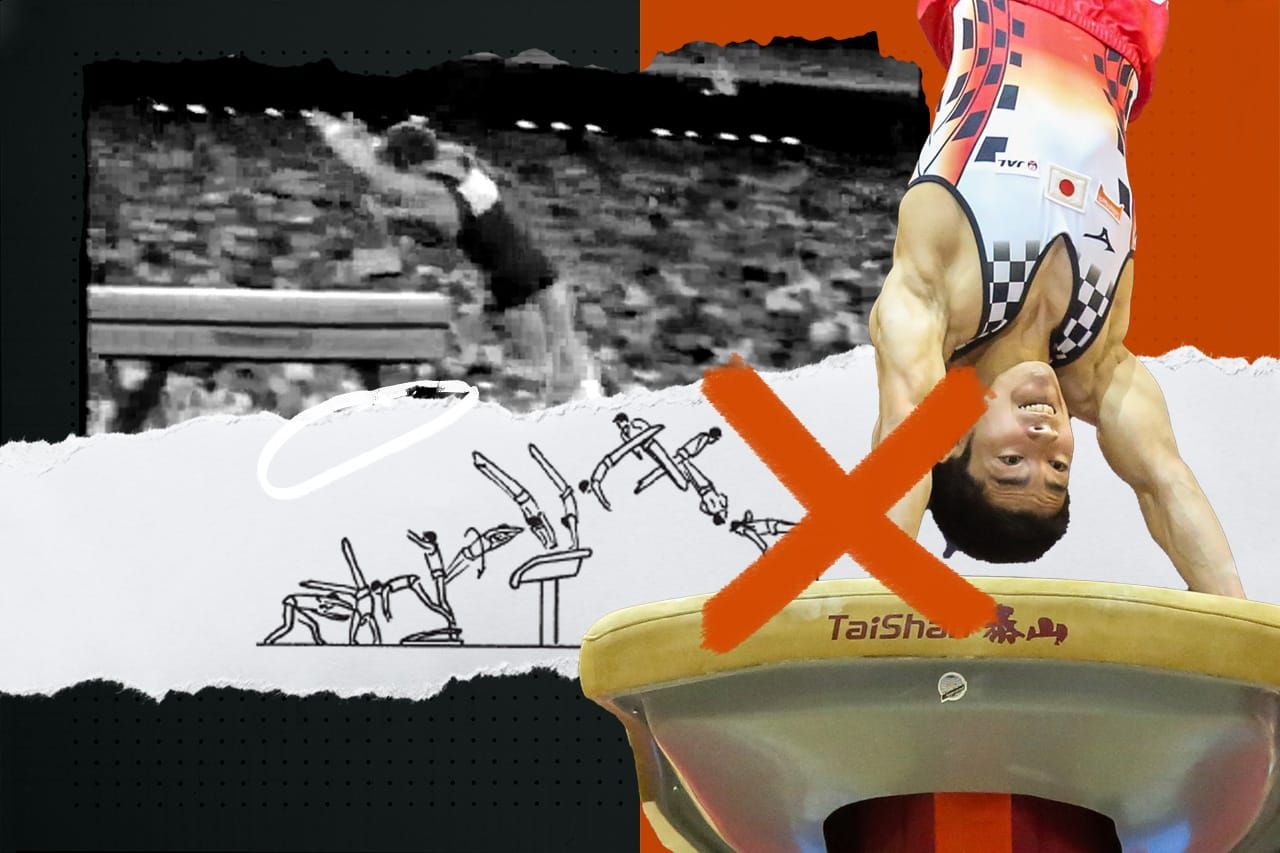
Once a symbol of innovation, the complex vault has been erased from the Men’s Code of Points after update
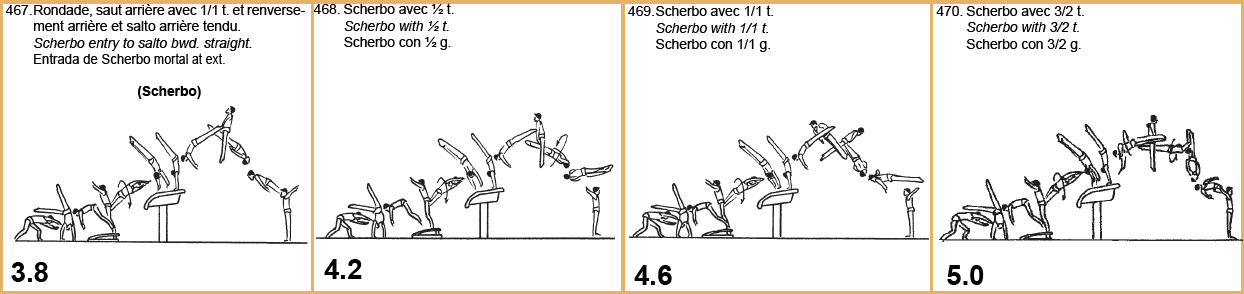
Following the rule updates after the Paris Olympics, 14 different vaults were removed from the Men's Code of Points. All of these vaults featured “Scherbo” entries, requiring gymnasts to perform a Yurchenko (a round-off back handspring) and to execute a quick full twist before making contact with the vault.
Why This Vault Was Removed
To begin with, this vault was incredibly rare to see in competition. The vault style was also very difficult to learn. However, just because something is unusual and hard to master is not a valid reason to eliminate a skill. There are plenty of skills that are not performed frequently but still remain in the code.
The issue with the vault was not only technically difficult, but even when performed perfectly, it did not generate power effectively. The full twist entry, even when done well, made it harder for gymnasts to achieve good contact with the table, and thus reduced their ability to complete post-flight flips and twists.
Over the past 30 years, there have been significant improvements in vault, with more athletes commonly performing double-flipping vaults and vaults with more than 2.5 twists. While the Scherbo vault was competitive when it was first introduced in the early 1990s, it struggled to keep up with trends in the apparatus, which rendered it largely ineffective at getting a competitive score in international competitions.
Barcelona Beginnings
At the 1992 Olympic vault finals in Barcelona, the most difficult vault was the double front (Roche), which remains a popular vault today. However, many gymnasts in the vault final also performed different versions of front layouts, which would be considered more basic difficulty in today's code. At that time, many gymnasts were experimenting with various types of entries.
The different types of entries, or “pre-flights,” refer to what a gymnast does from the moment they hit the springboard until their hands make contact with the vault horse. These entries involve changes in direction, such as going from backward to forward, or vice versa.
One of the more unique vaults was performed by Hungary's Zoltan Supola, who did a front handspring vault without saltos. However, he added a full twist during both the pre-flight and post-flight phases of the vault. This vault might seem very out of place in elite gymnastics today, but it was emblematic of the experimentation that characterized the early 90s.
Then there was Vitaly Scherbo, who went on to win the vault gold medal at the 1992 games. He performed a Yurchenko (round-off) entry into a full-twisting pre-flight, followed by a laid-out full in the post-flight. At that time, he was the only gymnast to perform this unique vault, the first in Olympic history, in fact. Scherbo's vault title added to his impressive haul of six gold medals at the 1992 games. In 1993, this vault was named the "Scherbo" in the code of points.
History note: Although Scherbo was the first to preform the vault with a laid-out full in the post-flight, Soviet gymnast Aleftina Prijachina was the first to perform this style of entry, having debuted it five years earlier at the 1987 European Championships.
The Vault Table Changes
In 2001, the apparatus used for vault was changed from the traditional horse to the current vaulting table. The vaulting table is designed to be safer for gymnasts due to its larger push-off area. Another benefit of the new vaulting table is that it allows athletes to place their hands not only more quickly on the apparatus, but also in the slightly curved area, where gymnasts are able to create more power.
This led gymnasts to favor vaults with greater post-flight difficulty. For example, consider Olympic champion Gervasio Deferr from Spain, who won the gold medal in 2000 with a technically challenging Yurchenko-half entry vault featuring a 1½ front twist on the exit, incorporating technical elements in both the entry and exit. However, he completely switched his vaults leading into the following 2004 Olympics, opting for a much simpler Tsukahara entry to allow for a more complex 2 ½ twist in the post-flight.
Gymnasts began performing more and more double-flipping vaults like the Blanik and Ri Se Gwang, as well as twisting vaults featuring over 2 ½ rotations, such as the Lopez and Li Xiaopeng.
Kenzo Shirai's Revival
In 2001, the code of points was expanded to assign values for upgraded versions of the Shcherbo vault, indicating what the value would be if a gymnast were to add more twists in the post-flight section. However, more than a decade would pass before any gymnast would compete a harder version of the vault.
Kenzo Shirai from Japan is renowned for his exceptional twisting abilities. He earned a bronze medal in the vault at the 2016 Rio Olympics with two twisting vaults, including one that was named after him, the "Shirai 2," and a 3 ½ twisting Yurchenko. Shirai is well-known for pushing the boundaries of twisting skills, having already originated multiple unique skills on both floor and vault.
In 2017, at the FIG Apparatus World Cup in Melbourne, he debuted a new vault called the "Shirai 3," which is an upgrade to the Sherbo vault. This new vault featured the same full twisting entry but incorporates a double twist during the post-flight phase.
At the time, World Gymnastics assigned the vault a difficulty rating of 5.40, making it slightly more valuable than common elite vaults such as the Yurchenko 2 ½ and the handpring double front, both of which were valued at 5.20 in the code. However, this vault was rated lower than those typically seen in international event finals, such as the triple-twisting Yurchenko and the triple-twisting Tsukahara or the Dragulescu (double front half-out), all valued at a 5.60 difficulty.
Despite spending countless hours in the gym training for this new skill, Shirai chose not to compete with that vault at the 2017 World Championships. Instead, he opted for a Yurchenko triple and a 2½-twisting Tsukahara. He executed this combination of vaults in the finals and became the vault world champion in 2017.
Gone from the Men’s Code, Surviving in the NCAA
Despite the elimination of the full-twisting entry from the men's code, it is still present in the women's code. This means it is still possible to see this entry in elite competitions. However, similar to the men's side, it has not been widely performed in women's gymnastics either. The most likely place to see this vault is in the NCAA. In the women's code of points, a Yurchenko full-on to back pike is still valued at a 10.0. This makes it worthwhile for female college athletes to still train this unique skill.
Author

Gabe is the founder of Auric Gymnastics. He is a former NCAA gymnast who represented the University of Nebraska from 2009 to 2013.
Sign up for Auric Gymnastics newsletters.
Stay up to date with curated collection of our top stories.