1. How many men's gymnastics events exist?
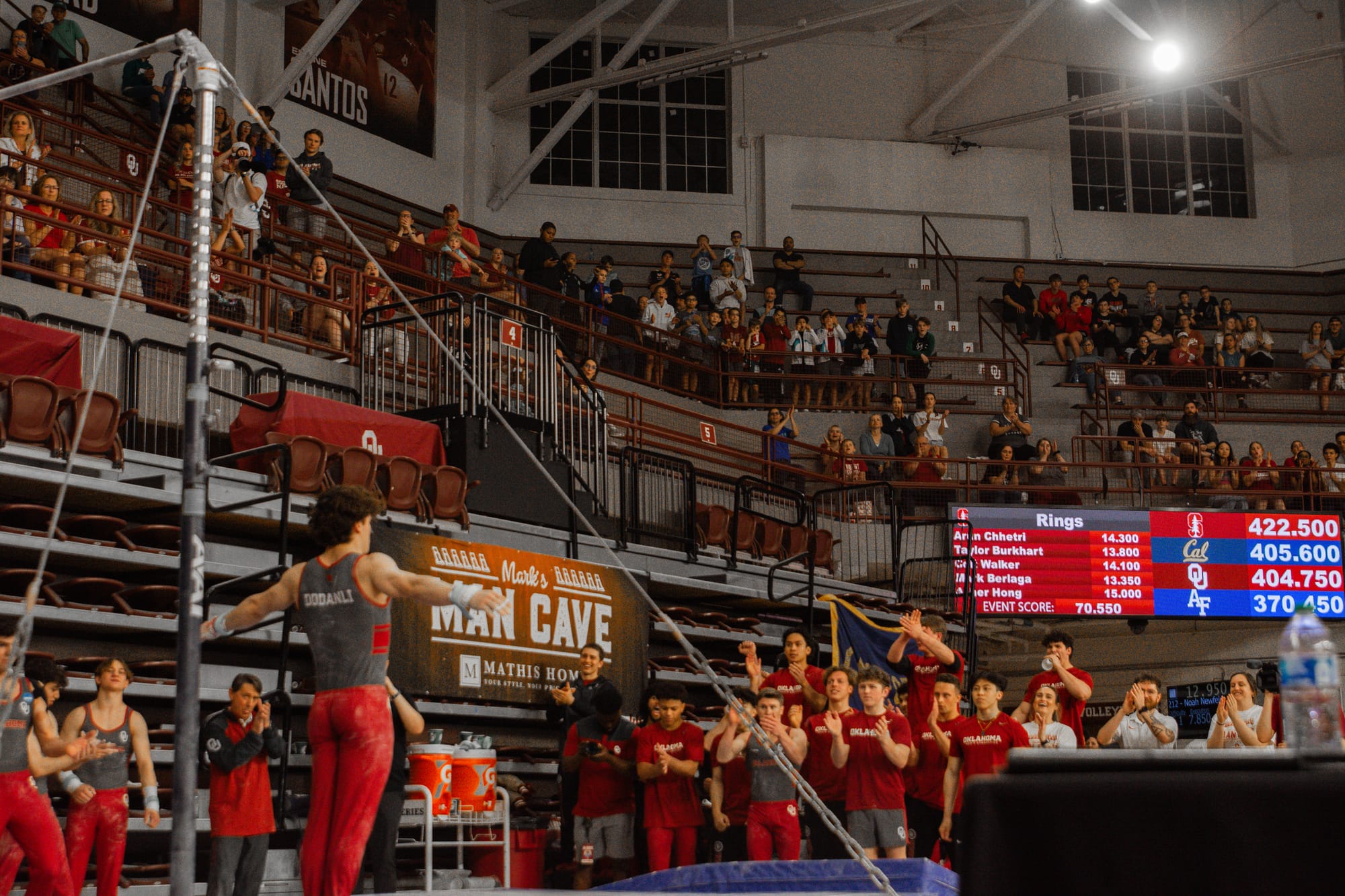
There are six men's gymnastics events: Floor Exercise, Pommel Horse, Still Rings, Vault, Parallel Bars, and Horizontal Bar (also known as the High Bar). At major competitions such as Continental Championships, World Championships, and Olympic Games, athletes compete for the All-Around total score across all six apparatuses, as well as in the Team Final (with 3 scores per event, making a total of 18 routines). Additionally, there are individual event finals. This creates a chance to win a total of 8 medals.
2. Which gymnast holds the record for the most US national titles in the All-Around?
For the men, Sam Mikulak boasts the most national titles, with six. He claimed victory from 2013 to 2016, and then again in 2018 and 2019. On the women's side, it's no surprise that Simone Biles leads with nine national titles. She dominated the competition from 2013 to 2016, then again in 2018, 2019, 2021, and from 2023 to 2024.
3. What is the rotation order for men’s gymnastics events?
The men follow this sequence: Floor Exercise ➡️ Pommel Horse ➡️ Still Rings ➡️ Vault ➡️ Parallel Bars ➡️ Horizontal Bar. To remember this order, it's useful to categorize the events by their types: Leg events (Floor Exercise & Vault), Front Support events (Pommel Horse & Parallel Bars), and Long Hang events (Still Rings & Horizontal Bar). The rotation progresses from leg events to support events to long hang events and then repeats. During larger competitions, the order remains consistent, but gymnasts will start and end their routines at different apparatuses.
For example, in the 2024 Paris Olympics, Team USA was placed in the third rotation group, beginning on Still Rings and concluding on Pommel Horse. This led to memorable moments, such as when Stephen Nedoroscik delivered a stellar final pommel routine, securing the bronze medal for Team USA.
4. Have the USA Men's gymnastics team ever won Olympic gold?
Absolutely, the USA Men's gymnastics team has clinched gold at several Olympic Games. Notable achievements include Trent Dimas securing gold on the High Bar at the 1992 Barcelona Games, and Paul Hamm capturing the All-Around gold in 2004 in Athens, albeit with some controversy.
The 1984 team also shone brightly, winning gold in the team competition. Additionally, Bart Conner won on the Parallel Bars, and Peter Vidmar did the same on the Pommel Horse. It's worth noting that these Olympics were boycotted by strong gymnastics nations, including the USSR, East Germany, and Hungary.
In the earlier days, American gymnasts snatched numerous golds, including ten in the 1904 Olympics, led by George Eyser, who remarkably competed with a wooden prosthesis. Frank Kriz won the vault in 1924, and the 1932 team returned with five golds. These earlier events included now-obsolete disciplines like swinging clubs and rope climb, with the modern form of gymnastics emerging post-1956.
5. Why do men and women have different gymnastics events?
The differentiation between men's and women's gymnastics events traces back to their unique histories and emphases. Men's gymnastics originated from military-style training, prioritizing strength, power, and control. This focus is evident in events like the rings and pommel horse, which assess upper body and core strength.
Conversely, women's gymnastics evolved with a focus on grace, agility, and flexibility, drawing inspiration from ballet and dance. This development is showcased in events like the balance beam and uneven bars, designed to highlight these attributes.
6. Can Men Do Balance Beam? What About Women and the Rings?
Definitely, many athletes have trained across various events. Olympic champion Kenzo Shirai, for example, has demonstrated his talents on the uneven bars and balance beam. Similarly, members of the co-ed Turnverein Ziefen's Swiss swinging rings troupe captivate audiences with synchronized performances that blend modernity with historical roots. Moreover, the National Association of Intercollegiate Gymnastics Clubs (NAIGC), which organizes recreational competitions, invites athletes to compete in any discipline they choose, offering a flexible and personalized competition experience.
7. Is trampoline an Olympic sport?
Yes, trampoline became an Olympic sport in 2000. It is recognized by the World Gymnastics (formerly the FIG) as part of the broader gymnastics discipline known as T&T (Trampoline and Tumbling). This category includes events such as synchronized trampoline, double mini-trampoline, and power tumbling, many of which feature team competitions as well. However, at the Olympic Games, only the individual trampoline event is contested.
8. Who is the Best Male Gymnast of All Time?
Many consider Japan's Kohei Uchimura to be one of the greatest gymnasts in history. A 21-time World Championships medalist, Uchimura dominated the all-around competition, winning back-to-back gold medals at the 2012 and 2016 Olympic Games. Between 2009 and 2015, he was undefeated in the all-around at the World Championships, cementing his legacy as one of the sport's most consistent and dominant athletes. Additionally, Uchimura excelled on individual apparatuses like floor exercise, parallel bars, and high bar, winning multiple World titles in these events. However, while he claimed most of his titles at the World Championships, Uchimura never captured an individual event gold medal at the Olympic Games.
Another strong contender is Nikolai Andrianov, a Soviet gymnast who remains one of the most decorated athletes in Olympic history. With 15 Olympic medals to his name—the most of any male gymnast—Andrianov demonstrated incredible versatility by medaling on every Olympic apparatus throughout his career. Ranked as the third most decorated Summer Olympian of all time, behind only Michael Phelps (28 medals) and Larisa Latynina (18 medals).
Fans of the sport might also point to 12-time Olympic medalist Alexei Nemov of Russia, whose elegance, artistic style, and technical skill earned him a loyal following. Nemov’s performances were celebrated not just for their difficulty but for their aesthetic appeal.
Innovation has also played a significant role in gymnastics, and Mitsuo Tsukahara of Japan is a prime example of a pioneer in the sport. He popularized the “Tsukahara” vault and was the first gymnast to perform a full-twisting double salto in the tucked position on floor exercise, a skill that has since become a staple in modern routines.
Lastly, Yordan Yovchev of Bulgaria deserves an honorable mention. A multiple-time World and Olympic medalist, Yovchev stands out for his longevity in the sport, competing in an unprecedented six Olympic Games, the most of any male gymnast in history.
9. Can tall people do gymnastics?
Absolutely! Gymnastics is a sport for individuals of all heights, with no restrictions in the Code of Points that limit participation based on height. In fact, Article 2.1 of the Code of Points, under the "Rights of Gymnasts," allows gymnasts to adjust certain apparatus to accommodate their height.
Throughout history, many successful gymnasts have been above average height, proving that height is no barrier to excelling in the sport. For example, Luke Stannard (video), the 2010 Nissen-Emery Award winner from Illinois, stands tall at 6'1". Similarly, NCAA All-American Russell Czeschin (video) from Oklahoma, nicknamed "Big Will" by his Sooner teammates, is 6'3". Perhaps the most accomplished tall gymnast is Alexander Shatilov of Israel, standing over 6 feet. Shatilov has earned multiple World Championship medals and is a European Champion on floor exercise (video).
10. What is a gymnastics federation?
A gymnastics federation serves as the official governing body for a country's national gymnastics team. Examples include USA Gymnastics, Gymnastics Canada, and British Gymnastics. These federations are responsible for selecting athletes and teams to represent their countries in international competitions. They may operate as part of a national government's official offices or as independent organizations, such as USA Gymnastics (USAG).
Author

Gabriel is a former NCAA gymnast, who represented the University of Nebraska from 2009 to 2013. He has also judged at the JO and NCAA level.
Sign up for Auric Gymnastics newsletters.
Stay up to date with curated collection of our top stories.