At first glance, it might seem as though there are seven “Tsukahara” elements. However, a closer inspection reveals that four are named after Mitsuo Tsukahara and three after his son, Naoya Tsukahara, so they are counted separately.
Throughout his competitive career, Kenzo Shirai of Japan, renowned for his exceptional twisting skills, originated six unique elements: three on floor and three on vault. With the removal of Sherbo-style vaults in 2025, his total is now five.
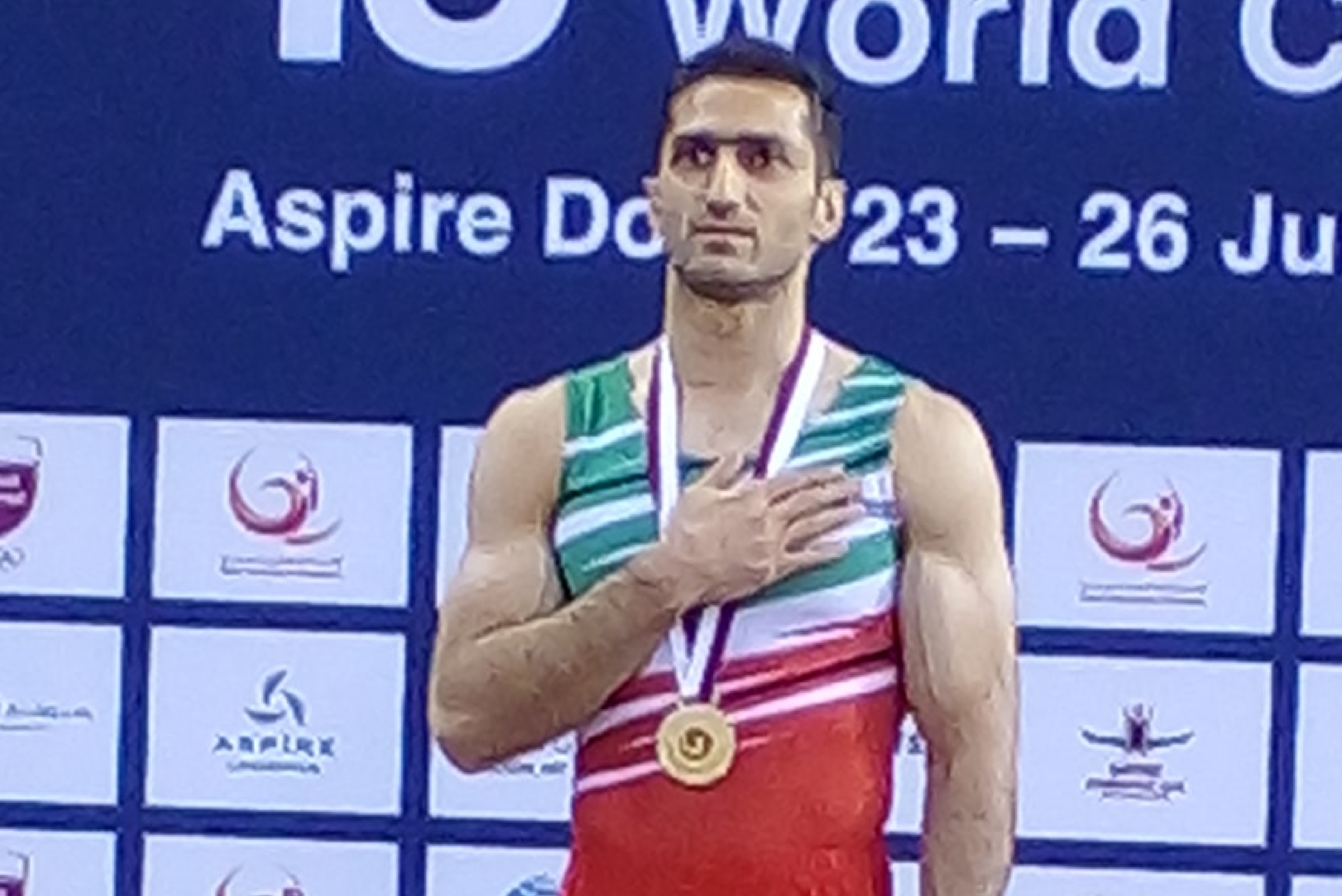
However, the gymnast with the most named elements is Iran’s Saeedreza Keikha, who has six. All of Keikha’s skills are on pommel horse and are variations of spindle or Stockli elements, typically performed with flair. In the 2025–2028 Code of Points, five of his six elements are classified under element group II, while “Keikha 4” is the only one in element group III.
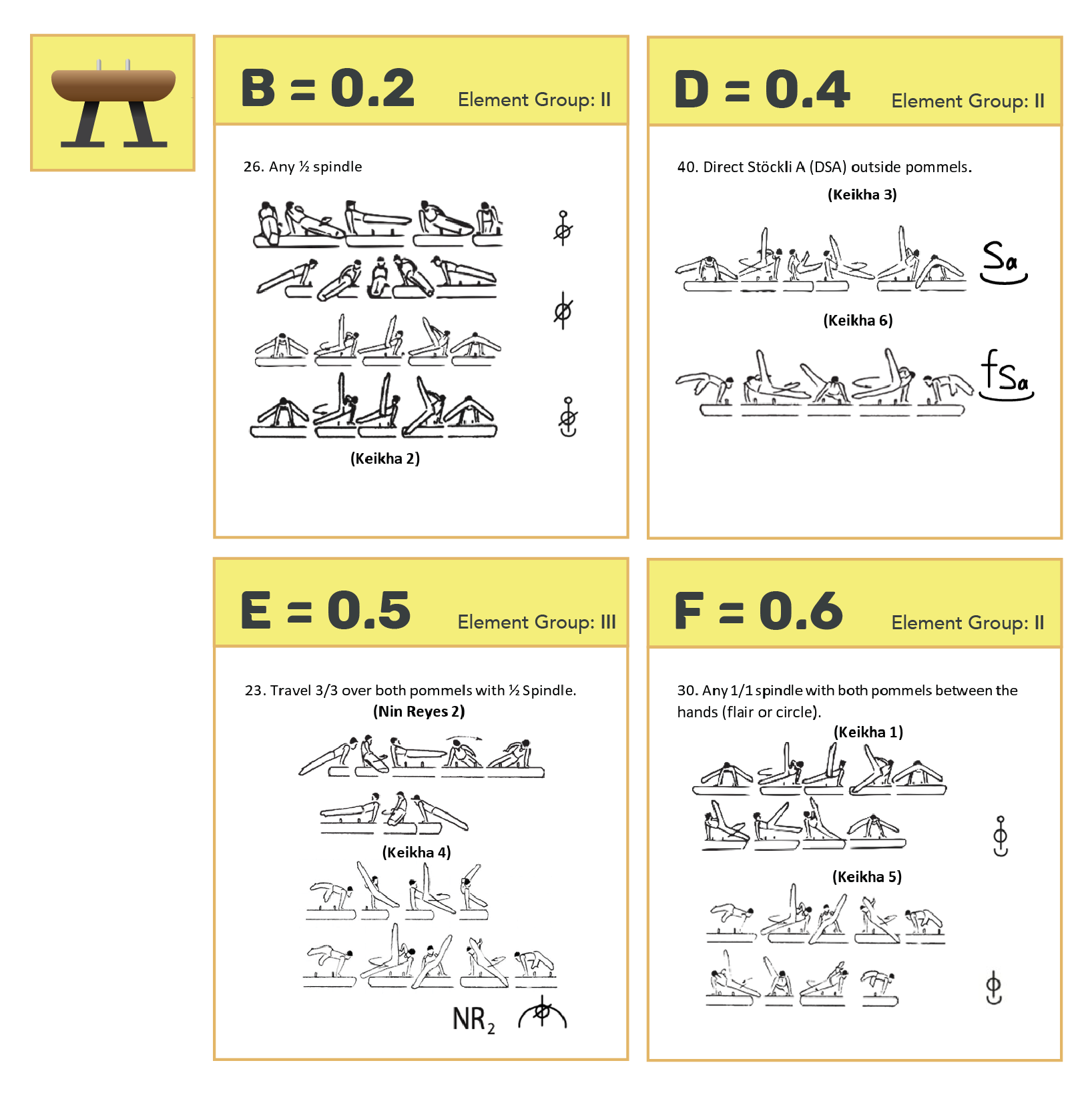
The simplest is “Keikha 2,” a flaired ½ spindle valued at B (0.2). The most difficult are “Keikha 1” and “Keikha 5,” which both involve a full spindle with both pommels between the hands and are rated F (0.6). The updated Code specifies that the skill can be initiated with the gymnast either lengthwise or facing forward, as Keikha originally performed the skills both ways, earning two different designations.
Keikha enjoyed an international competitive career spanning eight years, from 2013 to 2021. In addition to becoming the first Iranian gymnast to have a skill named after him in the Code of Points, he competed at two World Championships and numerous Apparatus World Cups. He medaled at three different World Cups, including a victory on pommel horse at the 2021 Doha World Cup, where he scored 15.20 to defeat future world medalist Ahmad Abu Al Soud and 2024 Olympic silver medalist Nariman Kurbanov.
Author

Gabriel is a former NCAA gymnast, who represented the University of Nebraska from 2009 to 2013. He has also judged at the JO and NCAA level.
Sign up for Auric Gymnastics newsletters.
Stay up to date with curated collection of our top stories.